01 · the problem
The Problem
Voice assistants are often discussed as a way to ease loneliness in later life. Comparatively little research had asked older adults directly how they reasoned about that role, or what they’d consider an acceptable use of a voice assistant in their social lives.
older adults are considered socially isolated, and roughly a third report loneliness.
National Academies of Sciences (NASEM), 2020the mortality risk of sustained loneliness in older adults is comparable to smoking 15 cigarettes a day.
NASEM / Holt-Lunstad et al.of adults 50+ now own a smart speaker, up from just 10% in 2019. Adoption is accelerating fast.
AARP Tech Trends, 2025adults 50+ still use digital assistants far less than adults under 50, a persistent adoption gap.
Pew Research CenterAdoption is rising and the stakes are real, but how older adults themselves want to be involved is still not well understood.
02 · approach
Approach & Rationale
Attitudes toward a technology that doesn’t really exist yet in this specific role are hard to capture with a fixed-response survey. People can’t rate what they’ve never had to think about. This called for a method built around reasoning, not measurement.
I designed the study around open-ended conversation rather than predefined variables, to surface how older adults themselves reasoned about the idea: what benefits they weighed, what made them cautious, and where they drew the line on an acceptable role for the technology. That’s the kind of reasoning a fixed-response survey tends to flatten.
Thematic analysis, grounded in the dataRather than coding against a model decided in advance, I let categories emerge from what participants actually said. That mattered for a question this underexplored, where the “right” categories weren’t established yet.
What this was designed to produceNot a yes/no adoption number, but a grounded account of the conditions under which older adults would say yes, and the roles they’d actually accept: something designers could act on directly.
03 · what I did
Data Collection & Analysis
Recruitment
Partnered with an independent senior living community rather than an online research panel, aiming to reach a broader range of perspectives than a panel of already tech-engaged volunteers typically would.
Data collected
35 semi-structured interviews, audio-recorded and transcribed in full, focused specifically on companionship and social participation rather than general tech attitudes.
Analysis
Transcripts were coded inductively, letting patterns emerge from participants’ own words, then grouped into broader themes through repeated rounds of comparison, checking each theme back against the raw transcripts before treating it as a finding.
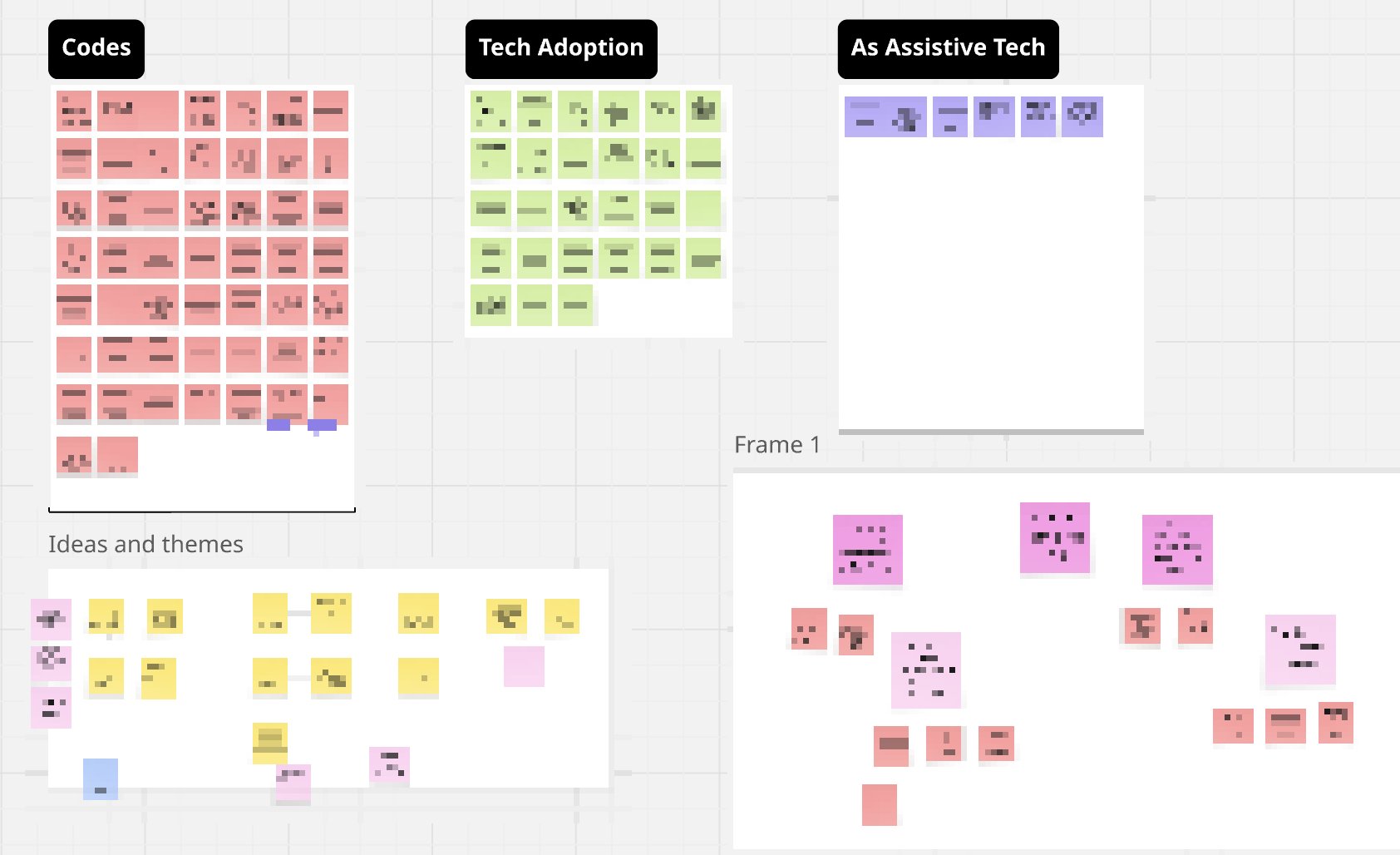
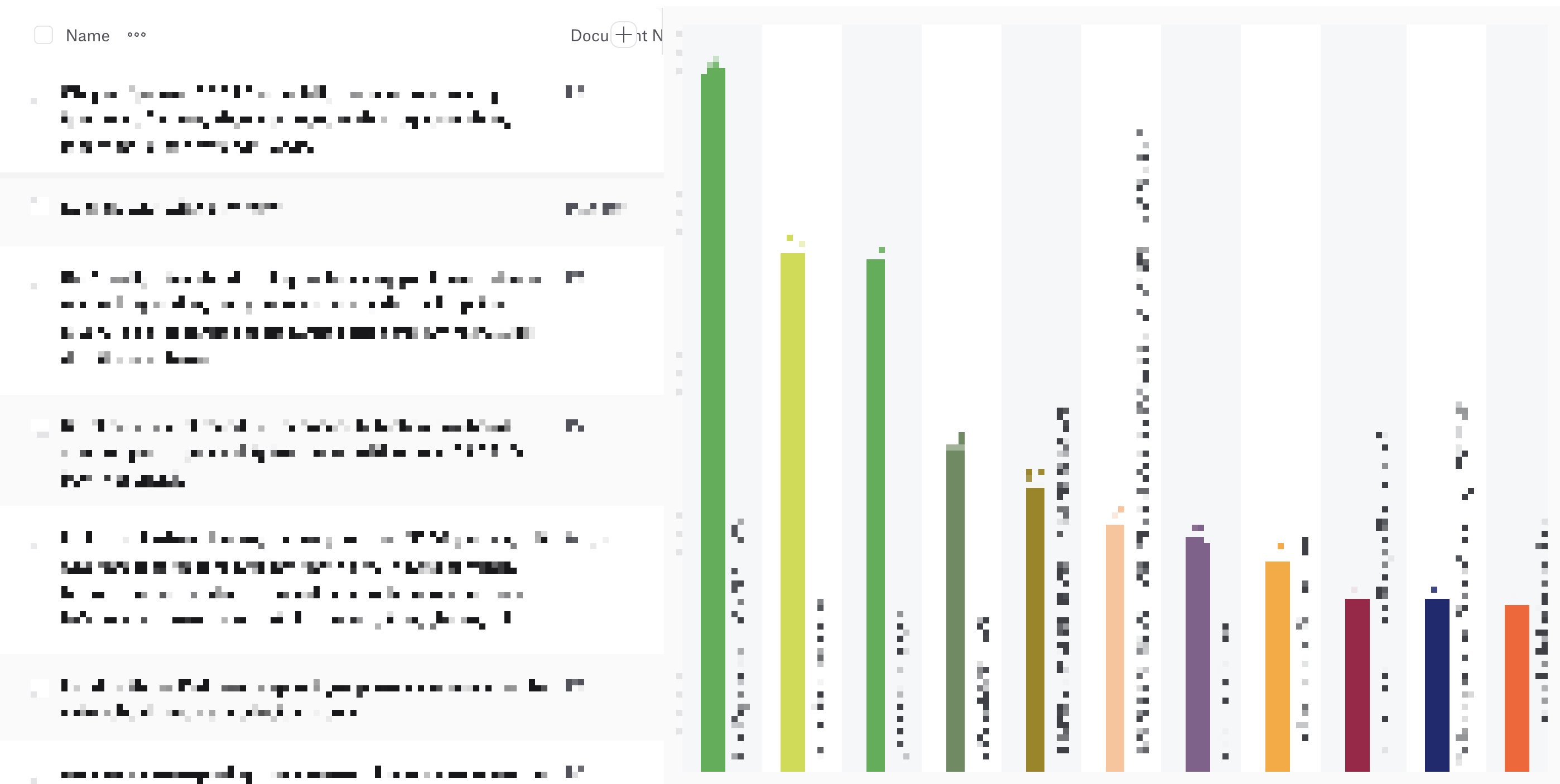
Note: text and figures are redacted to protect participant confidentiality and the study’s ongoing peer review.
04 · what I found
Not a friend. A helper.
That distinction came up repeatedly, and the roles participants described tended to fall into two broad categories.
Indirect help
Reminders, logistics, small nudges: support that stays in the background.
Direct help
Planning, coordinating, or initiating social contact on someone’s behalf.
Conditional adoption
Openness tended to hinge on a clear personal benefit rather than novelty alone.
Autonomy > convenience
Tools that supported independence beat tools that acted “for” people.
Effort mattered too. Even people open to the idea in principle lost interest fast if they anticipated struggling to remember commands or relearn the system.
Tools & methods
05 · why it matters
This points toward a different design question worth asking: not just will older adults accept a voice assistant socially, but what role, and under what conditions.
That distinction (facilitation over simulated companionship) may matter for whether a feature gets quietly abandoned or actually kept in use, though that’s a question for future work to test directly. It also extends adoption research on conversational technology to a population whose reasoning about these systems remains comparatively underexplored in HCI: older adults in independent living communities, considering the technology before anyone hands it to them.